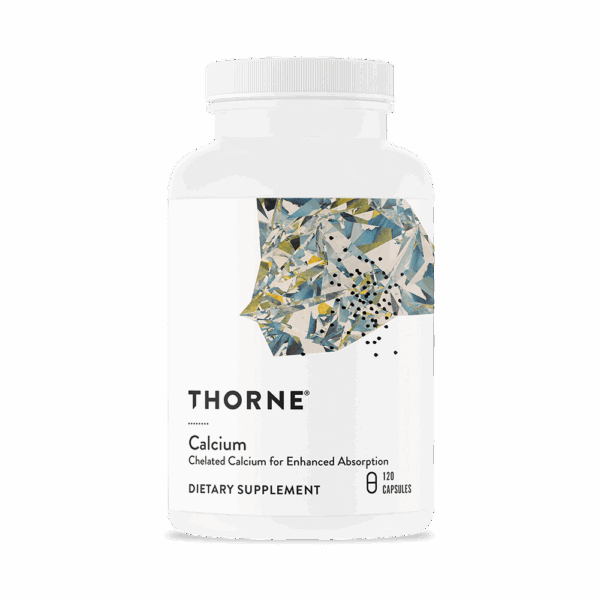
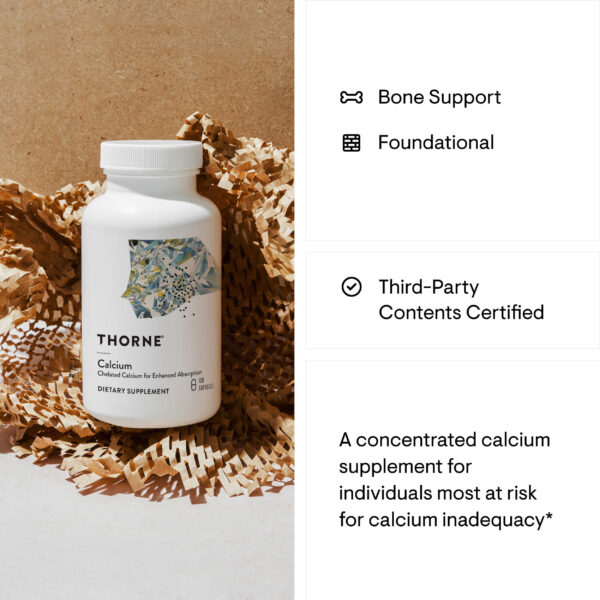
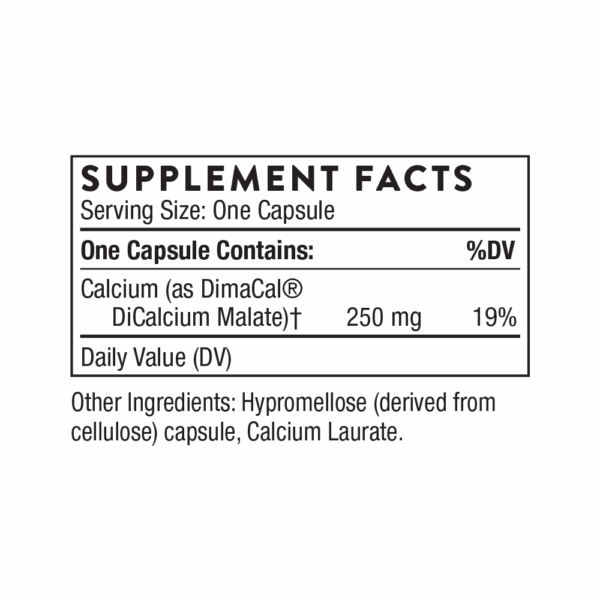
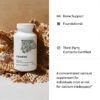
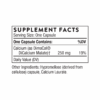
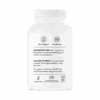
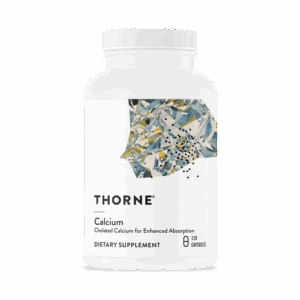
Research indicates that a large proportion of the U.S. adult population does not consume the 1,300 mg of calcium the U.S. Food and Drug Administration recommends for daily dietary intake. Individuals who are at the most risk for calcium inadequacy because of decreased intake, disordered metabolism, decreased absorption, increased loss, or increased need include peri- and postmenopausal women, vegans, individuals who take certain prescription and OTC medications, and those with a vitamin D deficiency (because vitamin D is necessary for calcium absorption).* Thorne’s Calcium, as DiCalcium Malate, with 250 mg per capsule, is more concentrated than other forms of calcium (such as calcium carbonate), and is absorbed significantly better than calcium carbonate.*
Calcium consists of one molecule of malic acid that is bound to two molecules of calcium, which results in a compound that is 29-percent calcium – compared to calcium citrate, which is 19-percent calcium – thus resulting in more elemental calcium per capsule.
Those individuals most at risk for inadequate calcium intake are:
- Peri-menopausal and post-menopausal women
- Women with irregular menstruation, particularly women in which this is due to prolonged athletic activity or strenuous military service
- Individuals on a dairy-free diet
- Vegetarians and vegans, because their diets are higher in plant-derived phytates and oxalates that inhibit calcium absorption
- Pregnant women, particularly women with a history of gestational hypertension
- Individuals on prescription and OTC medications such as antacids (H2 blockers or proton pump inhibitors) that can inhibit absorption, or glucocorticoids such as prednisone that can increase calcium loss
- Individuals with a vitamin D deficiency – because vitamin D is necessary for calcium absorption
This product has been third-party tested and certified to verify what’s in the package matches what’s on the label and to confirm it contains no unsafe levels of contaminants, such as heavy metals, pesticides, and microorganisms.